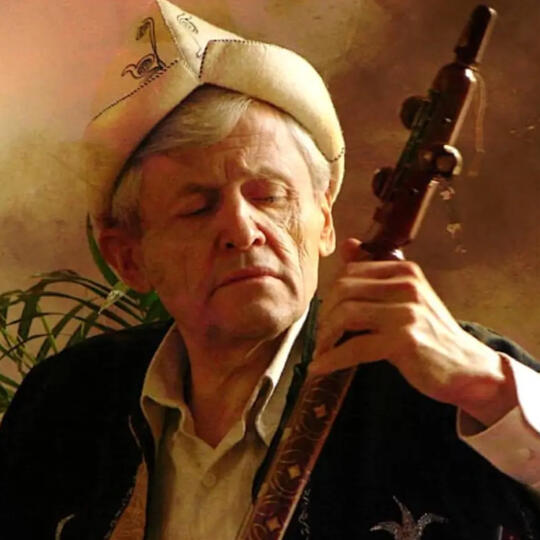
Dr. Rahmi Oruç Güvenç
Tasavvuf (Sufi) lineage holder · Central Asian (Shamanic healing) lineage holder · musician · composer · music therapist · ethnomusicologist · poet
May all those who enter listen deeply
Life
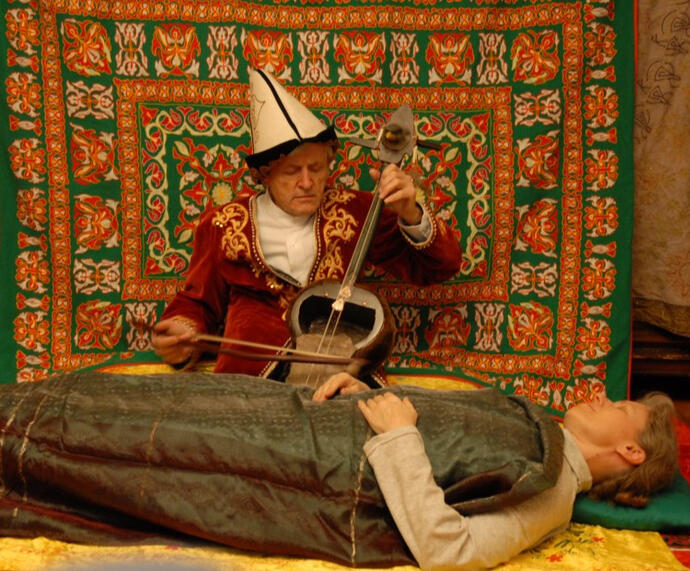
Dr. Rahmi Oruç Güvenç (1948–2017) was a Turkish lineage holder of Tasavvuf (Islamic Sufism), shaman, musician, composer, ethnomusicologist, music therapist and poet. His prolific life’s work helped renew modern interest in the therapeutic, spiritual and historical dimensions of Turkish-Ottoman makam traditions and related Central Asian musical cultures. He is best known through his founding of the organization TÜMATA --- Turkish Music Research and Promotion Group.

Born in Tavşanlı (Kütahya), Oruç Baba (as he is affectionately known to his students) began his musical path in adolescence—famously recounting a formative dream that led to early violin study—before expanding into multiple instruments including oud (ud), rebab, ney, and tanbur.He studied philosophy at Istanbul University, and later pursued doctoral work in clinical psychology at Cerrahpaşa, focusing on music as a mode of healing and the historical tradition of “music therapy” in the Islamic world.Güvenç went on to establish the Center for Research and Application of Turkish Music at Cerrahpaşa, and held academic posts including teaching and departmental leadership connected to music ethnology and music therapy in Istanbul.
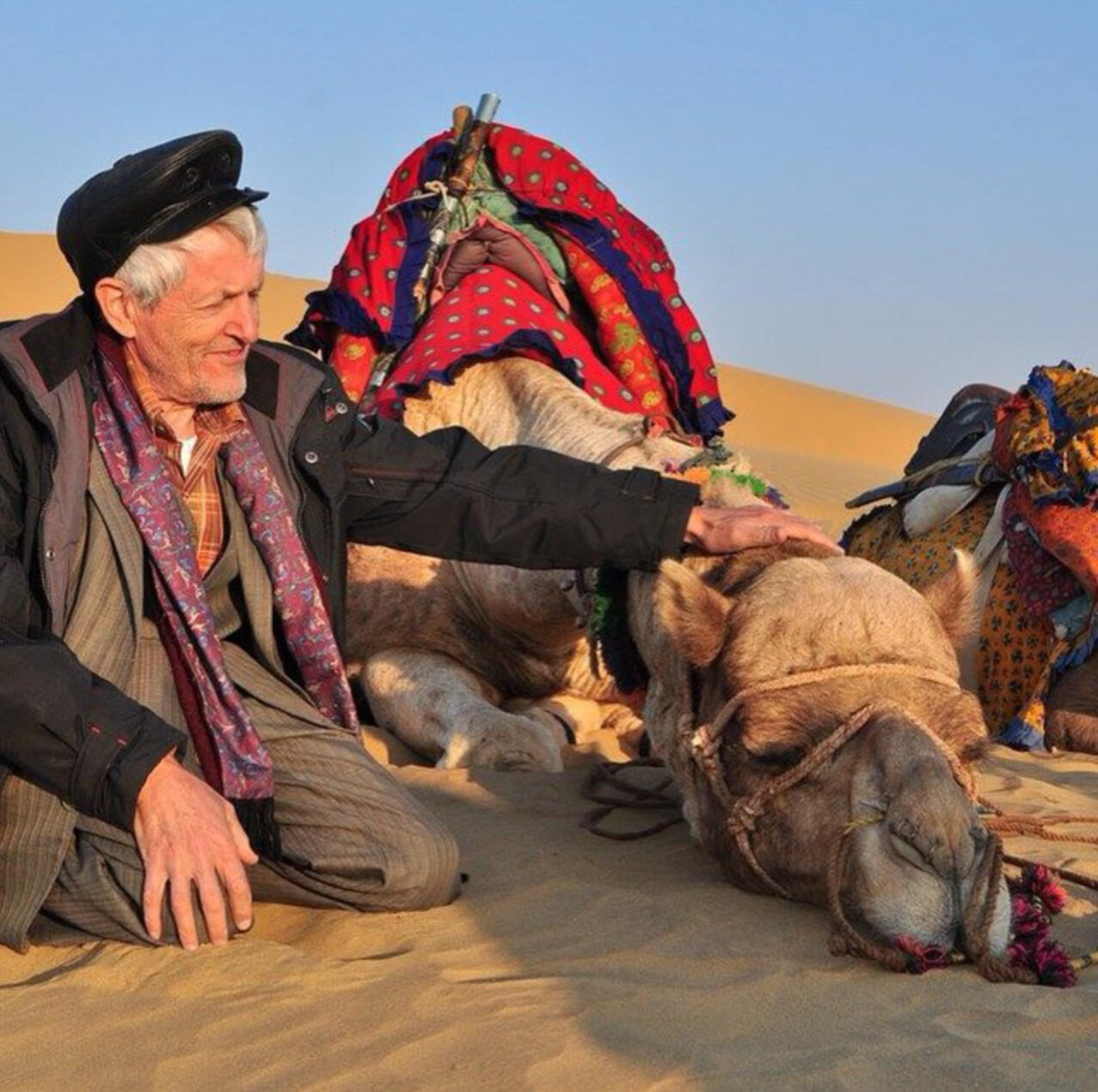
In the mid-1970s, he founded TÜMATA (Türk Musikisini Araştırma ve Tanıtma Grubu / Turkish Music Research & Promotion Group), an organization dedicated to researching repertory, recovering and reproducing historical instruments, documenting performance culture (including costume and decorative traditions), and exploring therapeutic and pedagogical applications of music and movement.Through TÜMATA and related training initiatives, he led seminars and courses across Turkey and Europe, and is associated with the creation and stewardship of substantial collections of traditional instruments.His international teaching included workshops, congresses, and institutional collaborations, and he received recognition such as an honorary professorship from the University of Fergana and an award from Argentina’s Academia de las Naciones.
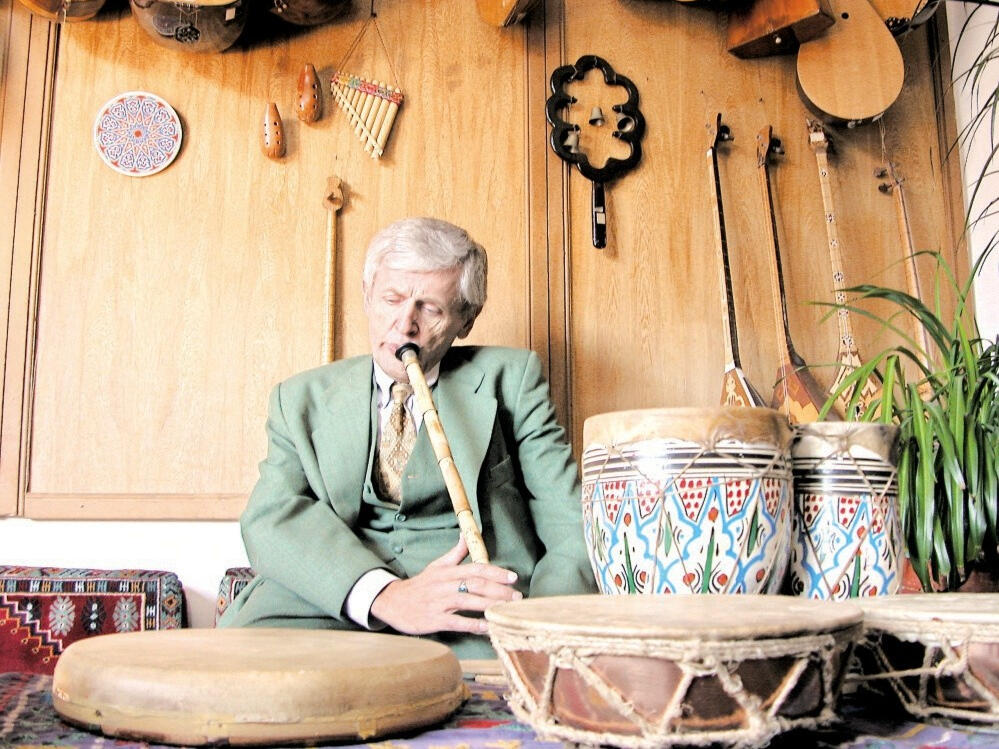
According to OrucHoca.com, these creative works are attributed to Oruç Baba:- History of Turkish Music and Turkish Therapeutic Music (Book)- Behind the Scenes of Our Music (13-episode television program)- Those Loved by God – Hz. Mevlana (Book. Translated into English and German)- Hey Traveler/Hey Reisender (Book. Prepared by his wife Andrea Azize Güvenç from seminar notes. In German)- Therapy CDs with Turkish Makam Music (Music CDs)- Instruments Used in Music Therapy in Turkish Culture (Book. Prepared together with his daughter E.B. Kanikey Güvenç Akçay)NOTE: The "Therapy CDs" have since been published for streaming on all major music platforms. Sources for obtaining the other materials are unknown.
Oruç Baba's work moved within the context of Tasavvuf (Islamic Sufism). His direct students remember and honor him as an Insan Kamil (a realized person).Sources also describe him as holding teaching authorizations across six tarakats (order paths) of Tasavvuf and bringing traditional devotional practices—such as forms of dhikr and sema—into educational contexts, particularly in Europe during the late 20th century.He is also noted by his students for lineage-holding in the Central Asian shamanic tradition, a rare honor that came to him through direct contact with a baksı (Central Asian shaman) who recognized his unique gifts.He passed away in Istanbul on 5 July 2017.Rahmetullahi aleyh
Nur içinde yatsın
Work

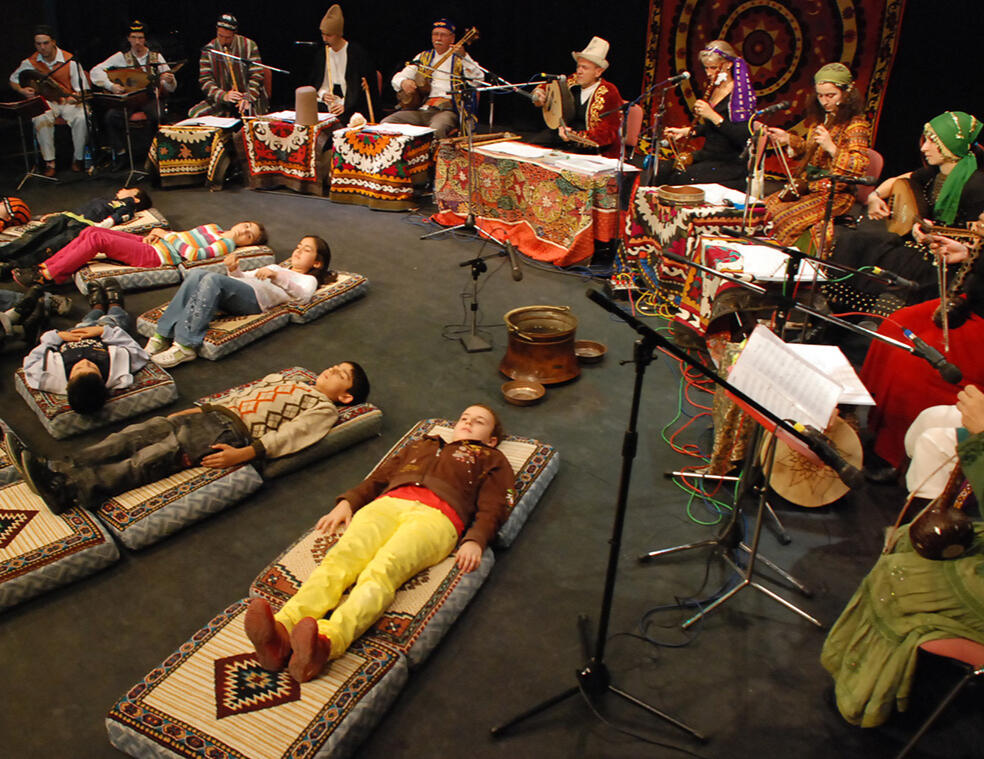
OVERVIEW OF TURKISH MUSIC THERAPYDr. Rahmi Oruç Güvenç is widely credited with reviving and shaping the contemporary transmission of Turkish Music Therapy, a traditional discipline rooted in the classical music systems of Anatolia and the wider Islamic world.This approach is sometimes also called Chorasan Music Therapy or Ancient Oriental Music Therapy, to acknowledge its roots in the wider Central Asian region and the healing traditions of its nomadic peoples and empires.Within these traditions, music, movement and listening were historically understood as modes of healing, regulation, and education of the human being. They were applied within medical, spiritual and pedagogical settings such as hospitals (darüşşifa), Sufi lodges (tekke) and courtly institutions.The foundations of Turkish Music Therapy, as transmitted by Oruç Baba, lie in the makam system: a modal framework in which melody, rhythm and progression are understood to carry distinct qualitative and affective properties.Medieval medical and philosophical sources describe the use of specific makams in relation to temperament, time of day, emotional state and physiological balance, emphasizing attentive listening as a primary mode of engagement rather than performance alone.
MAKAM, RHYTHM & HUMAN DISPOSITIONCentral to Turkish Music Therapy is the understanding that sound interacts directly with the human nervous system and psyche. Each makam is characterized not only by its scale, but by its melodic behavior, emotional color and relational movement over time.These qualities were traditionally observed in relation to:emotional and psychological states,
circadian rhythms and seasonal cycles,
bodily constitution and temperament, and
states of agitation, grief, lethargy, or imbalance.Rhythm (usûl) and, in some applications, measured movement or simple walking patterns accompany melodic work, reinforcing regulation, grounding and embodied awareness.Listening, rather than performance, has historically been considered primary. The listener is not a passive recipient, but an active participant in a process of attunement and regulation.

CONTINUITY & MODERN REVIVALWhile many of these practices diminished or fragmented with the modernization of medicine and music education, the twentieth century saw renewed scholarly and practical interest in recovering historical sources, instruments and therapeutic applications of sound.Contemporary Turkish Music Therapy as transmitted by Güvenç draws upon:historical medical texts and music treatises,
living makam performance traditions,
ethnomusicological research, and
clinical observation and applied practice.It is not a standardized or protocol-based therapy in the modern biomedical sense, but a relational, listening-centered discipline that emphasizes presence, continuity and careful transmission.
ORIENTATION & ETHICS OF PRACTICETurkish Music Therapy is not designed for mass application or rapid intervention. Traditionally, it requires:extended listening and apprenticeship,
sensitivity to cultural and spiritual context,
restraint in claims of efficacy, and
respect for lineage, limits, and transmission.Its orientation is toward supporting balance, cultivating attention, and restoring relationship—between sound and body, inner and outer rhythm, individual experience and inherited tradition.
THERAPEUTIC USE OF MAKAMSAccording to an article published by Oruç Baba in Voices: A World Forum for Music Therapy, his music therapy method associates specific makams with observed therapeutic effects, including the following:Nihavend: Gives a general feeling of relaxation and peace. Beneficial for the abdominal area. Regulates blood tension and circulation. Relaxes the muscles. More effective around noon. The pentatonic quality induces feelings of confidence and determination.Rast: Beneficial for the head and eyes; supports paralysis. Induces joy, enjoyment, and comfort. Sign: Aries. More effective at dawn and midnight.Rehavi: Induces feelings of eternity, infinitude, and general relaxation. Beneficial for the head and eyes. Sign: Libra. More effective at dawn.Hüseyni: Beneficial for internal organs such as the liver, heart, and stomach. Increases resistance against malaria. Induces peace, calmness, and relaxation. Sign: Scorpio.Hicaz: Beneficial for the urogenital system and kidneys. Induces feelings of humility. Sign: Sagittarius.Acemasiran: Induces creativity and a sense of infinitude. Supports labor and alleviates pain.Ussak: Beneficial for gout and the feet in general. Induces sleep and laughter. Sign: Pisces. More effective at dusk.Segah: Strengthens the heart and benefits the brain. Induces bravery and relaxation.Saba: Induces religious feeling, bravery, and strength; also supports relaxation. More effective at dawn.Buselik: Induces general relaxation. Beneficial for the abdominal area and muscles. Regulates blood tension and circulation.Isfahan: Removes negative thoughts; clears the mind and increases intelligence. Beneficial for gynecological conditions. Increases mobility and self-confidence. Sign: Gemini.Neva: Removes negative thoughts. Beneficial for waist and hip pain and gynecological conditions. Restores taste and induces relief and happiness. Sign: Aquarius.Irak: Particularly affects individuals with tan complexion. More effective in mid-morning. Supports learning, understanding, and concentration. Beneficial for stubborn or coarse dispositions. Relieves fear and agitation. Sign: Taurus.Buzurk: Alleviates apprehension and fear. Clears the mind and directs thought. Beneficial against fever. Sign: Leo / Group: Fire.Zirefkend: Beneficial for back, muscle, and acute abdominal pain. More effective after midnight. Sign: Cancer / Group: Water.Zengule: Beneficial for the brain and heart; supports stomach and liver function. Related to hip joints and inner legs. Sign: Virgo–Libra / Group: Earth.

ADDITIONAL KEY FEATURES OF THE METHODArchetypical movements: Preparatory therapeutic movements involving arms, shoulders, and head.Image music: Supports the healing process by inducing visualization and imaginal response.Baksı dance: An ancient improvised therapeutic dance originating from the Altai mountain range.Pentatonic melodies: Induce feelings of self-confidence and determination.Sema / Semah: Examples drawn from Sema and Semah practices, including the whirling traditions of dervishes.
INSTRUMENTS USED IN TURKISH MUSIC THERAPYAccording to writings by Oruç Baba, Turkish Music Therapy draws on a wide range of traditional instruments from Anatolia and Central Asia. These instruments were selected not for performance alone, but for their tonal, vibrational, and relational qualities within therapeutic listening contexts.The prominent presence of Central Asian instruments in this tradition reflects the nomadic and shamanic roots of therapeutic sound practices that predate later courtly and institutional (largely Ottoman) forms, emphasizing listening, vibration and regulation over performance and display.- - -Stringed instruments (plucked and bowed)Rebab: A bowed string instrument with a fish-skin–covered coconut body and horsehair strings; of Central Asian origin.Ud / Kopuz: A short-necked, wide-bodied lute played with a pick; Central Asian in origin.Tanbur: A long-necked, seven-stringed instrument played with a pick.Saz / Bağlama / Cura: Long-necked Anatolian folk instruments, central to regional musical traditions.Dombra / Dutar: A two-stringed plucked instrument associated with Kazakh and Kyrgyz Bakshi shamans.Kılkopuz: A bowed instrument with horsehair strings, used by Central Asian shamans.Rubab (Kockarca): A skin-covered wooden lute with a long neck, used in Uzbek and Tajik traditions.Tartar: An Azerbaijani long-necked lute made of mulberry wood.Abak Kemane / Gicek: A bowed instrument with a gourd body and mulberry neck.Morin Khuur: A Mongolian bowed instrument with horsehair strings and a carved horse-head neck.- - -Harps and zithersCeng: A Central Asian harp with 14–24 strings, historically used in Mevlevi music.Kanun: A plucked zither with approximately 75 strings, resting on the knees.Cetigen / Yatugan: A lap zither with 17–20 strings from Yakutia and Kazakhstan.- - -Wind instrumentsNey: A reed flute made of cane, central to Sufi musical traditions.Balaban / Mey: A double-reed wooden wind instrument found in Anatolia and Central Asia.Miskal: A Central Asian pan flute made of bound cane pipes.Sıbızgı: A Kazakh wooden flute played between the teeth.Koray: A narrow-cane flute from the Idil-Ural region.Uzbek Nay / Turkmen Kaval: Regional wooden wind instruments.Nefir: A wind instrument made from mountain goat horns.- - -Percussion and rhythmic instrumentsMazhar (Bendir): A frame drum with skin stretched over a wooden hoop, played with the fingers.Kudüm: A pair of small clay kettle drums played with sticks (zahme).Halile: Small cymbals used for rhythmic accompaniment.- - -Vibrational instrumentsGubuz / Sangobiz: A mouth harp made of metal, producing sound through breath and vibration.- - -These instruments form a sonic vocabulary through which therapeutic listening, regulation, and attunement were historically explored, often in conjunction with specific makams, rhythms and modes of attention.
Links
Below please find initial sources, with more to followWhile Baba taught primarily in Turkish and was often translated into German or even Spanish, few English-language resources of his work currently exists. The following resources (which are mostly in English) share varying perspectives on Baba's work from those who knew him or study his approaches.A translation of selected oral teachings into English is presently in progress.*Kindly note: Presentation of sources here is purely a public service. Inclusion does not constitute a claim of endorsement by or affiliation with such sources.
CONNECT WITH LINEAGE HOLDERS & ADJACENT ORGANIZATIONS
Andrea Azize Güvenç — Baba's widow, community leader and music therapist
READ BOOKS ABOUT BABA & THE LINEAGE
Asst. Prof. Dr. Rahmi Oruç Güvenç: The eternal sheikh
Turkish Music Therapy: Textbook for a holistic medical approach
From Shamanism to Sufism: Women, Islam and Culture in Central Asia
LISTEN TO BABA'S "SOHBETLER" PODCAST
WATCH BABA ON YOUTUBE
Meleklerin Sesi - Sound of Angels (Documentary)
TÜMATA - Tasavvuf Musikisi (Nihavend, Hüseyni, Uşşak Makamları
STREAM BABA'S THERAPEUTIC MUSIC
READ ARTICLES ON BABA & MUSIC THERAPY
A View of TÜMATA by Rahmi Oruç Güvenç
Shamanic Traditions: Oruç Güvenç and the healing power of music
Orüç Güvenç’s Music Is the Closest I’ve Come to the Sound of Heaven
Bridge Builder Rahmi Oruç Güvenç
Transfer Processes Within Sufi Rituals: An example from Istanbul
Techniques of Transformation: Subtle material bodies in dhikr and other (breathing) practices
Sound Healing with the Five Elements
The Four Sources of Ancient Oriental Music & Movement Therapy
Honoring Oruç Güvenç's contributions to Turkish classical music
Rivers of One: Traditional sufi healing music (with Oruç Güvenç and TÜMATA
The Music Man: TÜMATA and Turkish Music Therapy
Healing Knowledge of the Orient
A Late-Night Sufi Music Lesson from Istanbul with Orüç Güvenç
Chanting Ṣalawāt as a Form of Self-Cultivation
Music Therapy — A Holistic Model
A NOTE ON SOURCES & ACKNOWLEDGEMENTSThe materials and resources presented here draw from a range of publicly available and archival sources, none of which have personally endorsed this site.This site exists in gratitude to the many teachers, students, translators, institutions and listeners worldwide who have preserved, transmitted and made accessible the work and teachings of Dr. Rahmi Oruç Güvenç across languages and generations.Special thanks and acknowledgement are given to his family, and to his wife, Andrea Azize Güvenç, for her continued devotion to his legacy.This site is offered in a spirit of respect, continuity and careful listening.